Part 1: Ever Think About Death?
That encounter, that interaction, that acceptance of…well, the end.
Life’s journey is like a fleeting moment, just a blink in the vastness of time. And at its core? The inevitable: death and the encounter that might lie beyond.
Ever since I can remember, I’ve had this gift—or maybe it’s a curse—of thinking deeply about life’s impermanence. Thanks to my Eastern philosophical upbringing, I understood early on that a person’s purpose often ties back to Seva, or selfless service. And the universe? It handed me so many chances to serve professionally, from working in shelters for the unhoused to diving into the world of Emergency Medical Services. These experiences plunged me into life and death situations. And while words still can’t quite capture the depth of those moments, I think it’s time I shared a bit.
Picture this: A 19-year-old Gurmukh, lounging on my sister’s couch watching TV in our grandparents’ basement. Back then, I was a different animal, intense workout sessions with the demands of full-time work and school. Anyway, a UFC promo popped up, featuring Frank Mir. He looked straight into the camera and dropped a line that hit me hard:
“Do you know what the true definition of hell is? It’s when you die, and you meet the person you could have been.”
It felt like the universe slapping me…awake.
I scribbled it down straight away: “Dying and meeting the person you could become.”
That quote? It haunted me. And then life, being its usual unpredictable self, brought it back. An old buddy of mine posted a watered-down version, something like “imagine meeting the person you could be”. I chuckled, thinking, “Everyone’s playing philosopher these days, just rehashing old ideas as their own shit.” But then, as if to prove a point, more of these reworked quotes started showing up on my feeds. Just like that old haunting.
The Cosmic Confrontation: Imagine, if you will, an otherworldly rendezvous. Standing in an endless void, you come face-to-face with a figure that eerily mirrors your every trait, but this doppelganger is the embodiment of your untapped potential, the “you” birthed from different life choices. How would you feel, staring into the eyes of this spectral twin? Would your heart swell with pride or would it be consumed by the chilling grip of regret?
The Ripple: Such a confrontation could shake your whole worldview. It might reveal where we’ve let mediocrity dim our shine. On the flip side, it could highlight our mistakes, lost chances, and forgotten dreams. But amidst the emotional whirlwind it stirs, this encounter can light the way to self-awareness.
The Wisdom to Embrace:
- Harness the Power of “Choice”: Every crossroad, every moment—it’s in your hands to decide and shape.
- Pursue Relentlessly: Bridge the gap between who you are now and who you could be.
- Be KIND to Yourself: I’m emphasizing this, y’all, because it’s crucial. Always remember that the “could have been” version of you isn’t set in stone. It’s just one of many possibilities. But we HAVE to treat ourselves with kindness, celebrating our wins and forgiving our slips.
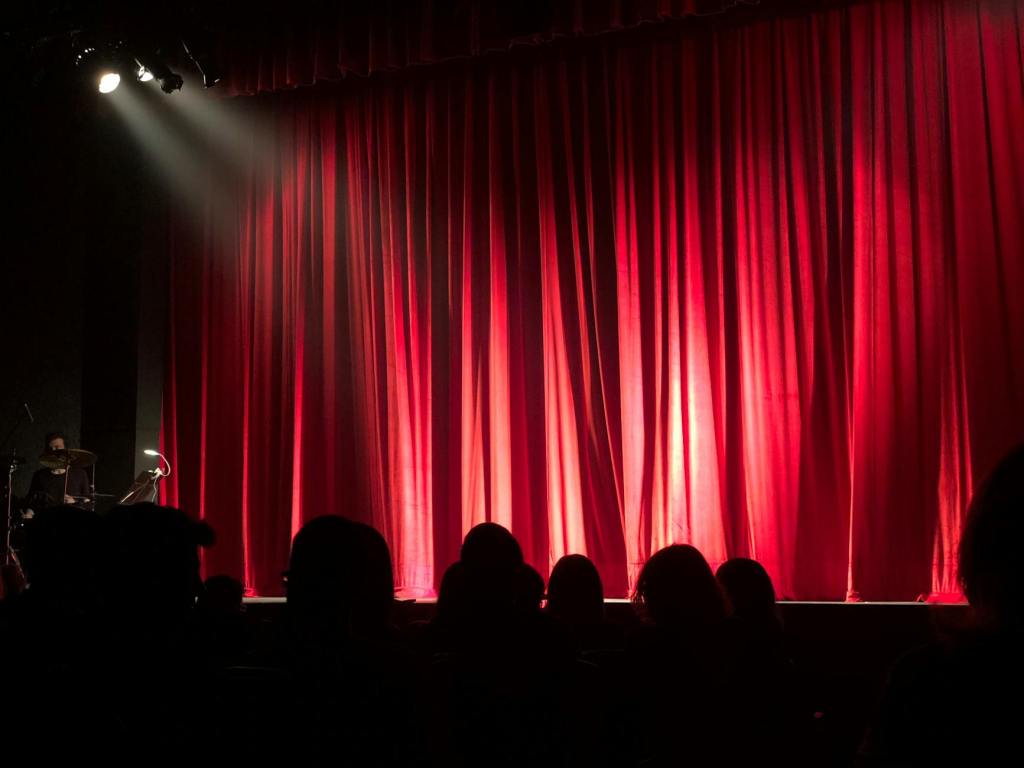
Death? It’s always been that final mystery, that thing that tests our deepest beliefs. The idea of facing a version of ourselves we never became is both enthralling and humbling. But if we glean some wisdom from these reflections, we can strive to be our best selves—the version we’d be proud to meet when life’s final curtain falls.
Part 2: Embracing the Cycle
I am a moon child; a mind and soul that’s enraptured by creation and it’s drama.
Looking into the night sky is more than a pastime for me; it’s a ritual that makes me feel like I am connecting to the soul of the universe. Growing up in Northern BC, with its clear star lit skies, I found myself endlessly fascinated by the vastness and mystery of the cosmos, and I remember feeling like time would stand still while I thought about the secrets that the stars held. Those mountain skies will always hold a piece of my heart.
But, as time went on and the demands of life grew, the mountain sky turned into city sky and the views into the vastness became obscured. The nightly ritual slowly became a cherished memory and a reminder that our connection was lost due to progress and pollution.
Now, it’s on those rare nights, when I look up, the city lights dim (just a little), the clouds roll back, and I get a glimpse of stars, I’m taken back to that place of wonder and reminded of our speck-like presence in the grand drama of existence. It’s easy to see why some existentialists view the cosmos as a dance between creation and destruction, a source of both wonder and existential dread. But my own journey into the fleeting nature of life has led me to see death and creation as inseparably intertwined, offering us a lesson in endings as being transitions to new beginnings.
Recent conversations with friends about existentialism brought to mind a memorable quote from J.R.R Tolkien’s “Lord of the Rings” – yes, I’m using LOTR again to highlight a point. I love it and if you’re on this unlikely journey with me, you’ll learn to love it. The dialogue is between my favourite wizard, Gandalf, and a concerned hobbit named Pippin, and they’re about to face some real turmoil.
Pippin: I didn’t think it would end this way.
Gandalf: End? No, the journey doesn’t end here. Death is just another path, one that we all must take. The grey rain-curtain of this world rolls back, and all turns to silver glass, and then you see it.
Pippin: What? Gandalf? See what?
Gandalf *as he’s staring into the distance with a twinkle in his eye*: White shores, and beyond, a far green country under a swift sunrise.
Pippin: Well, that isn’t so bad.
Gandalf: No. No, it isn’t.
The exchange between Gandalf and Pippin, set against the backdrop of an impending doom, serves as a metaphor for the cycles of the universe and its essence. Where stars emerge from space dust to live for eons before their spectacular demise into supernovas – thus seeding future generations of stars and planets – illustrating the cycle of creation and destruction.
It mirrors life itself, where every ending paves the path for a new beginning, and death opens the door to new life. In Sanskrit, this ongoing cycle is called Samsara: the perpetual cycle of birth, death, and rebirth, in the direction towards the soul’s liberation. A concept that is deeply embedded in numerous philosophical and spiritual traditions, it reminds us that existence is cyclical, not linear. Cultures around the world celebrate Earth’s cycles, acknowledging that death, as much as birth, is essential for renewal.
If you haven’t made the connection yet, this post isn’t just about stargazing, it’s about confronting the profoundness in creation and destruction, and how it frames our existence.
So, how often do we recognize these endings as catalysts for creation in our lives? The endings of relationships, a career, or life chapter can feel like a personal demise and like a part of us has been hollowed out. It’s in these moments, I often find myself thinking that a part of me died with it and when analyzing it, it’s precisely these moments that the seeds for new growth are sown. The change challenges us to face our fears and preconceptions about endings, and seeing them as opportunities for transformation and rebirth, rather than finalities.
Embracing this cycle has been a journey of acceptance, growth, and learning for me. It taught me the value of letting go, making room for new, and trusting the natural flow of life. I think this understanding has deepened my connection to the greater surroundings in life and from a young age it’s offered me a guiding philosophy for living with intention.
So, how do we integrate this wisdom into our daily lives? With practice, of course. Practice, practice, practice. It starts there, with awareness and the willingness to see beauty in life’s impermanence. By recognizing the cycles within and around us, we can live more fully and embrace each moment and transition with openness and courage.
This is your call to embrace the cyclical nature of existence and reflect on the unity of death and creation, and to find strength in the understanding that in the grand tapestry of life, we’re all just woven from “star dust” and are participating in the eternal dance of the universe.
With that, I hope this inspires you to live with greater compassion, mindfulness, and wonder. Cherishing the journey and countless beginnings that are hidden within every ending.
Part 3: In Nature’s Garden
I think the concept of a garden is a beautiful metaphor for life. It’s a living and breathing entity that’s always growing and changing, and it’s full of potential, diversity, and cycles. It encompasses the complexity and beauty of life itself – highlighting the individual journeys of growth and renewal. One definition from Merriam-Webster is that of a noun and is “a plot of ground where herbs, fruits, flowers, or vegetables are cultivated”. The dictionary definition makes me chuckle because of how literal and simple it is, reminding me that many of us are often constrained in truly expressing ourselves due to the limitations of language, but that’ll be a conversation for another time. I love the use of metaphors, and I hope you’re growing (pun intended) to love them on this journey with me.
I want to take you on a stroll that’s a little different this time – it’s acknowledgment and reflection based. A thank-you letter to Nature, if you will, with Lao Tzu’s wisdom sprinkled in. As a reminder, Lao Tzu was an ancient sage that knew about life and its flow.
Enjoy.
Thank you, Nature, with a capital “N”.
Life, from the get-go, is like to being entrusted with a vast and ever-evolving garden. It’s a realm of endless possibilities, bewildering in its diversity and potential. And within this garden, every plant, every bloom, and every seed carries within it the pulse of life and the whispers of the universe. You see, Nature, it’s your eternal cycles that stand as a testament to the journey of the human spirit. Teaching us that life is a complex thing and is marked by seasons of growth, blossoming, and regeneration.
Lao Tzu writes:
At birth man is supple and soft
At death he is firm and hard
In Creation plants and trees start out tender and fragile
but end up withered and rotten
Thus firmness and strength are the disciples of death
And suppleness and softness are those of life
This translation resonates deeply with me, I think he was urging us to stay flexible and to bend in life’s breeze rather than standing so stiff that we break. Which for me, and maybe you feel this way too, means to acknowledge Nature beyond simply noticing its ever presence.
So, to the Moon I say – Dear Moon, your ever-changing visage embodies the essence of renewal and transformation. You teach us that the phases of life, much like your own from new to full, are lessons in patience and progression. Screaming “Look at me! So bright and so full!” one moment, then playing hide-and-seek the next. You’re telling us something vital with your cycles, and if I’m “listening” correctly: it’s okay to have phases, and to feel incomplete at times, because that’s all part of growing and glowing.
And to the Trees, oh my dear Trees, your cycle is a living testament to Lao Tzu’s teachings. From the starting as a fragile sprout, to being determined and growing into the mighty oak that stands firm before the wind – you embody the journey from softness to strength, from being flexible to being steadfast. But it’s in your beginning, in the delicate strength that allows you to bend and sway with the breeze, that true life is found. Your end, marked by rigidity and decay, serves as a reminder: that in flexibility and adaptability lies the essence of vitality.
And Ocean, dear Ocean, your tides, influenced by the Moon, are a testament to the strength in softness that Lao Tzu described. The ebb and flow, a gentle yet powerful force, shaping coastlines and guiding marine life. The rhythmic pulse between the moon’s pull and the earth’s embrace, it shows us the beauty of movement and return, of possessing the strength to recede and the softness to advance anew. It’s in your ceaseless motion that we find a reflection of life’s own rhythms within the grand garden of existence.
So, thank you, Nature. Within your boundless garden I find the courage to embrace the countless cycles of our existence – for in the grand narrative of yours, our lives are but a seedling in the infinite cycle of you. A cycle that teaches us, truly, that with each breath and every heartbeat, there is an ending and a beginning.
With love,
Gurmukh
References:
Trapp, J. (2017) Tao Te Ching Illustrated – The Way to Goodness and Power. Amber Books LTD.
 The Unlikely Collective Inc.
Leave a comment