
Embracing Folklore in Psychology
Growing up, my ears weren’t filled with Indian Folkfore but rather with the stories of the Sikh Gurus, other legendary Sikhs, and their numerous sacrifices that echoed within my communal spaces. The narratives were rich with courage, integrity, and selflessness, and they laid the groundwork for my understanding of the world’s tapestry of cultures and the wisdom that’s embedded within them. It’s from this perspective that I approach the significance of folklore in psychology – a field that, in its Western manifestation, often overlooks the depth of insight that such stories can offer.
Folklore represents an ancient stream of knowledge, comprising myths, legends, and narratives that have worked their way through generations, acting as the cultural backbone of societies. And the stories do more than entertain; they offer us profound insights into the collective psyche and facilitate our journey to self-discovery. Yet, the nuanced human experience they encapsulate frequently finds itself marginalized by a Western psychological framework that favours categorization and empirical validation over the symbolic and subjective richness that’s inherent in in these tales.
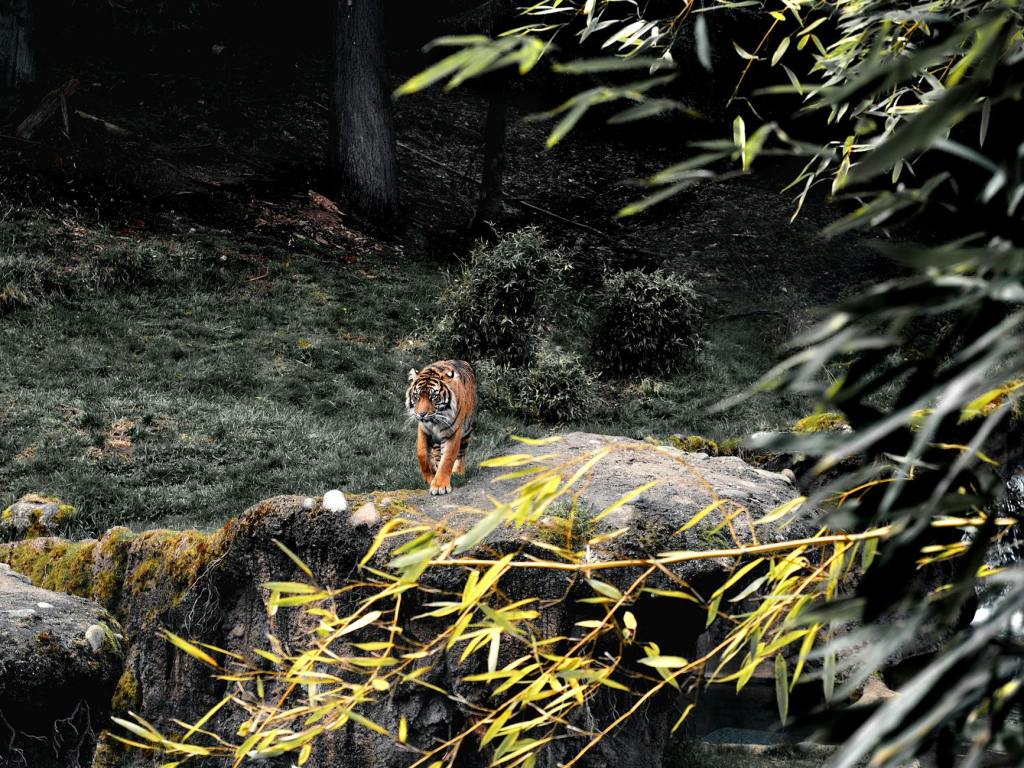
The story of The Tiger and The Goat, as shared by people like Joseph Campbell and Osho, exemplifies the psychological journey of uncovering one’s true identity amidst societal conditioning and expectations. The tale narrates the life of a tiger cub, raised by goats, believing itself to be one among them until an encounter with an adult tiger sets it on a path of self-realization and transformation. This story, beyond its surface narrative, mirrors the psychological processes of conditioning, identity formation, and the profound impact of mentorship and self-awareness in transcending the limitations placed upon us by our environments.
The allegory highlights the journey of discovering one’s authentic self and it highlights the broader dialogue on the integration of folklore into psychological understanding. The reluctance of Western psychology to fully embrace the wisdom of folklore stems from a tension between its empirical foundations and the subjective depth of cultural narratives. But, dismissing folklore means neglecting a vital reservoir of knowledge that offers diverse perspectives on the complexities of the human psyche.
So, folklore, with its collective wisdom, gives us a unique lens through which we can explore how different cultures navigate, understand, and inspire meaning into life’s experiences. By weaving the stories into psychological practices, we can achieve a more holistic understanding of human behaviour and mental processes. The integration enriches the discipline and it enhances practitioner competence, fostering cultural empathy and an appreciation for the myriad of ways we navigate our life’s journey.
And if I may be so bold to say that in my psychotherapist infancy, beyond entertainment, some of these stories are vessels for psychological truths and are instruments of healing. Challenging us to look deeper, to recognize the symbolic within, and to connect to the collective human experience. I think it might be in the merging of ancient narratives and contemporary psychological insights that we unlock the mysteries of the human spirit, guiding us towards a society rooted in Oneness.
With that and love, I leave you with the story of The Tiger and The Goat.
The story is of a tigress who is pregnant and starving hungry.
She comes upon a flock of goats and decides to pounce on them, the goats scatter and the action brings upon the birth of her little one and unfortunately, her own death.
The goats come back to their little grazing place and find the little tiger and its dead mother. With their strong paternal instincts, they adopt the little tiger, and he grows into adolescence thinking he is a goat – bleating and eating grass.
The cellulose in the grass though, made him a miserable specimen of the species.
Then one day, a grown tiger comes around and pounces on the flock, the goats once again scatter but the young tiger doesn’t. He is a tiger after all, less fearful by nature than the goats. So there the young tiger stood, staring at the grown tiger, who was now staring back.
The grown tiger asks – “What, you living here with these goats?”
The little tiger goes “Baaaaa” and begins nibbling on the grass again.
The grown tiger hits him a few times, takes him by the neck, and drags him to a nearby pond.
The grown tiger says – “Look into the pond.”
The young one, teary eyed and shaken, looks, and for the first time sees his actual face. Not believing the enlightenment, he steps away and questions himself, questions what he thought he knew, questions the fact that he was a goat.
The tears begin to dry and a new sense of being begins to arise in his mind – maybe he isn’t a goat.
The grown tiger puts his face over the pond and exclaims – “You see?! You’ve got a face like mine, tiger.”
The young tiger is confused but begins to comprehend. The grown tiger then guides the young one to his once den where he had left the remains of a recently killed gazelle.
The grown tiger takes a chunk of the dead gazelle and says to the young one – “Eat.”
The young one looks puzzled but begins to understand when the scent of the meat first strikes him. He exclaims that he is a vegetarian but slowly begins to eat – chewing and gagging in disgust.
Then something happens to the young one, something deep begins to awaken. His nervous system, as if to be asleep, awakens.
With that, the young one lets out a little tiger roar and the goat begins to disappear with it.
The tiger emerges in all his splendor and beauty.
References
Campbell, J. (2014). The Hero’s Journey: Joseph Campbell on his life and work (3rd ed.). New World Library
Osho. (1975). Yoga: The Alpha and the Omega, Vol 4. [Unknown Publication City]: [Unknown Publisher].
Navigating Limitations and Social Conditioning
Our understanding of reality was fundamentally transformed many moons ago by the great philosopher named Immanuel Kant. He suggested that our perception of the external world is inherently limited by our mind and senses. Implying that our access to the true essence of things beyond our subjective experience is intrinsically constrained.
So for this blog, we’re going on a journey through the metaphor of the tiger that was raised amongst goats, read here. I’m going to be inviting you to question the invisible fences in your life and to navigate the terrain of rediscovering your inherent strength and potential. Hopefully by the end of it, I’ll have planted a seed that urges you to confront the constructs that confine you from seeking the true essence of yourself.
Can you remember who you were, before the world told you who you should be? – Charles Bukowski
The philosophical premise from Kant dovetails right into Bukowski’s inquiry. If you’re paying attention you’ll notice that together, they frame a narrative of self-discovery, one that challenges you to peel away the layers of societal expectations and conditioning.
Many of us navigate our life’s journey with the belief that we’re confined by the barriers of our upbringing and the societal pastures that we graze upon.
The belief isn’t a reflection of our incapacity, but rather a testament to the power of social conditioning and the invisibles fences that get built around us – from expectations and norms to the narratives handed down through generations.
The tale of the tiger cub serves as a poignant metaphor for our own lives. Like the cub, we often internalize the identity and limitations imposed upon us by our environments. We graze on the grass of conformity, bleating in unison with those around us, unaware of the roaring potential that lies dormant within. This part of our journey is marked by a lack of self-awareness, where the boundaries of our reality are defined by the confines of our constructed identity and not by the vastness of our potential.
But what causes us to see ourselves as goats rather than the tigers we truly are?
It’s a complex interplay of psychological factors: the need for belonging, the fear of the unknown, and the comfort that’s found in familiarity. These factors tether us to familiar ground, making the thought of venturing beyond, daunting and unfathomable.
The step towards transformation involves recognizing the invisible fences and questioning the narratives that we’ve been fed, challenging the status quo, and daring to envision a life beyond the meadows that we know so well. It’s about realizing that the grass we’ve been content to chew on may not sustain us, not because it lacks nourishment, but because we are meant for a different sustenance.
“You Are the Goat” isn’t a label meant to confine, it’s meant to enlighten. It’s a call to explore the depths of our being, to question, and to seek. It’s an invitation to look beyond the reflection in the pond – not to see what we’ve taught to see, but to discover the tiger…something more…waiting for its moment to emerge.
The journey from goat to tiger isn’t about changing who you are but about shedding the layers that obscure your true essence. It’s about unlearning and going on a pilgrimage towards self-discovery, where each step away from the herd is a step closer to the roar that echoes in the depths of your soul.
As we navigate this journey, acknowledge the goat that’s within with compassion and understanding, for it is an essential part of our story. It teaches us resilience, adaptability, and the strength found in vulnerability. But also…dare to dream of the tiger, to embrace the power, grace, and majesty that comes with living our truth.
Embracing your sovereign self: The Tiger’s Journey to Oneness
We are now at the precipice of transformation where “you are the Goat” evolves into “you are the Tiger”.
This stage is about realizing and embracing the sovereign power within yourself – a transition from internalizing imposed limitations to recognizing our inherent strength and potential.
Inspired by Ram Dass’ beautiful concept of “walking each other home”, we can recognize our journey as an intertwined path of mutual support, discovery, and the quest for authenticity. Ram Dass, a Harvard professor, spiritual leader, writer, and LSD connoisseur who ventured deep into the human psyche with some of the great yoga practitioners of India, teaches us the value of companionship in our spiritual journey, emphasizing that our exploration of self is enriched when shared with others. Through this dance of self-discovery, we peel away the layers of societal conditioning, and reveal the sovereign self that is within – a self that is free like the tiger.
Many moons ago I began sharing a quote in my yoga teachings, “lose your mind and come to your senses”. It’s from the German psychologist and Gestalt therapy practitioner, Fritz Perls. It’s brings me joy to share this quote in a final chapter of a transformative series. The wisdom is a call to embrace our sensory experience, acknowledging the teacher in the air, water, and earth – over intellectualization as a crucial step in awakening the tiger within. It’s about grounding yourself in the present, engaging fully with the world through your senses, and thereby accessing the profound strength and wisdom that resides in your intuitive self. This sensory awakening allows you to break free from the invisible fences that confine you, and guides you in navigating the world with oneness as the guide.
The essence of embracing your tiger spirit is a call to experience life with the intensity and presence that transcend conventional thought. It is in this state of sensory enlightenment that we discover the courage to liberate ourselves from imposed limitations, to stride forward with confidence and sovereignty.
As tigers, you embody the deep knowingness that comes from fully inhabiting your body and your senses. The journey towards reclaiming your power is, in essence, a journey of reclaiming your innate ability to live fully and freely. It’s a recognition that our true essence is not confined by the labels and constraints that are imposed on us but is as boundless and majestic as the tiger’s spirit.
The transformation from goat to tiger is more than a metaphor for personal growth; it’s a reflection of the spiritual awakening to our true essence and the universal Oneness that connects us all. It’s in this realization that we find the ultimate freedom and sovereignty of being. We learn to live in the truth of our interconnectedness, embracing the boundless potential within us to serve, love, and uplift one another on our shared journey home.
I hope this final narrative serves you in a way that allows you to embrace your sovereign self. It’s here that you discover the power that’s inherent in you and the profound connection that binds you to others and the universe.
I invite you to step into the fullness of your being, to live authentically and freely, and to recognize the beauty of our shared humanity and our place within the greater whole.
Some reflective prompts and prescriptions for your journey out;
- Reflect on your tiger moments. Think of a time when you felt most in tune with your inner strength and sovereignty. What were you doing, and how can you bring more of that energy into your daily life?
- Walking each other home. Write about a person who has been instrumental in your journey of self-discovery. How have they helped you to ‘walk home’, and how can you be that person for someone else?
- Sensory awakening. Spend a day/hour/minute purely on your senses. At the end, journal about the experience. What did you notice that you usually overlook? How did it feel to lose your mind and come to your senses?
- Breaking free from the invisible fences. Identify a belief or fear that confines you. Reflect on its origins and brainstorm actionable steps that you can take to liberate yourself from this limitation.
- Oneness with Nature. Find some time to engage deeply with nature. Choose an element that resonates with you (earth, water, air, fire) and reflect on what it teaches you about interconnectedness and your place in the universe.
- Create a mantra. Create a personal mantra, ensure that it feels deeply personal to you and embodies the essence of your tiger spirit. How does this mantra inspire you to live with more authenticity and freedom?
With love,
Gurmukh
 The Unlikely Collective Inc.
Leave a comment